


Special Educational Needs (SEND)
The Special Educational Needs and Disability (SEND) Department caters for the needs of students with academic, physical, social and emotional difficulties. We aim to provide inclusive provision to all students identified with Special Educational Needs and Disabilities (SEND) to ensure that they participate fully in the life of the Academy and achieve all that they are capable of.
Our SENCO at the academy can be contacted via d.howe@lan.merciantrust.org.uk.
Our SEND policies are available on our Policies page.
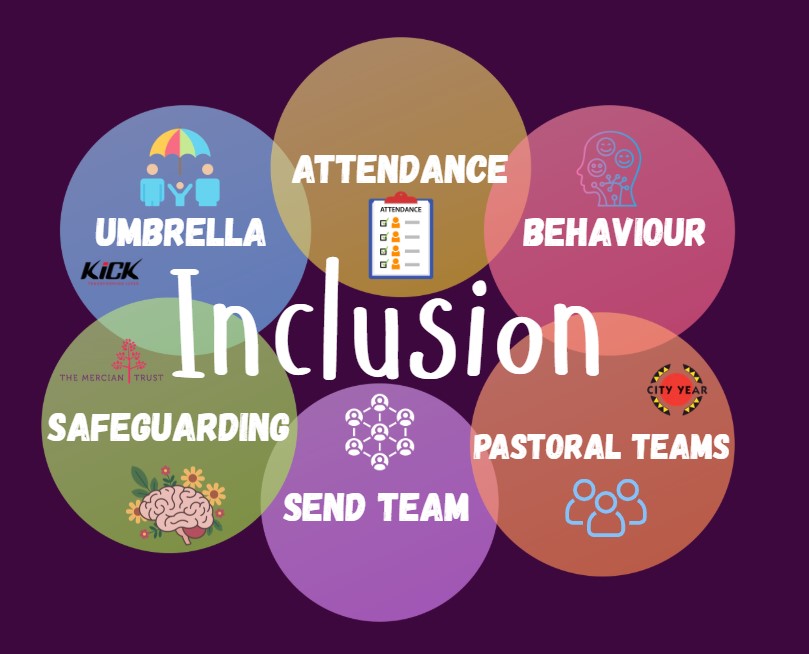
What does the SEND department do?
The SEND department supports students who have additional learning needs.
This may include help with:
- Learning and understanding
- Communication
- Social skills
- Emotional regulation
- Physical or sensory needs
- Organisation and independence
The aim is to help every student succeed and feel included.
What is SEN Support?
SEN Support is help given in school for students who need extra support but do not have an EHCP.
This may include:
- Small‑group work
- In‑class support
- Adapted resources
- Check‑ins with staff
- Extra time or scaffolding
What is an EHCP?
An Education, Health and Care Plan is a legal document for students with significant and long‑term needs.
It explains:
- What the student finds difficult
- What support they need
- What outcomes they are working towards
- Not all students with SEND need an EHCP
How does the school identify SEND needs?
Teachers and support staff look at:
- Classwork
- Assessments
- Behaviour
- Communication
- How the student manages day‑to‑day tasks
- Parents and carers can also share concerns.
If needed, the SEND team may involve outside professionals.
What types of needs do we support?
Most mainstream schools support:
- Cognition & Learning (e.g., dyslexia, processing difficulties)
- Communication & Interaction (e.g., Autism, Speech/Language needs)
- Social, Emotional & Mental Health
- Sensory & Physical Needs
What type of support might my child receive?
Support is personalised but may include:
- TA support in lessons – very rarely 1:1
- Small‑group interventions
- Visual aids and scaffolds
- Social skills groups
- Quiet spaces
- Mentoring
- Adapted work
- Assistive technology- where appropriate
Will my child be taken out of lessons?
Only if it benefits them.
Most support happens in the classroom, but some students may attend:
- Literacy or numeracy groups (usually during registration)
- Social communication sessions
- Emotional regulation sessions
- Parents are informed if regular withdrawal is needed
How do we support communication and social needs?
We may use:
- Consistency of delivery
- Now/Next boards- when suitable
- Social stories
- Structured routines
- Safe adults
- Quiet spaces – Time Out Pass
- Small‑group social skills work
How do we support emotional needs?
Support may include:
- Check‑ins
- Pastoral mentoring
- Safe spaces
- Regulation strategies
- Break cards (Time Out Passes )
- Reduced sensory load
- Links with external agencies
How do we work with parents and carers?
We communicate through:
- Meetings
- Phone calls – key worker calls
- Emails
- Annual reviews (for EHCPs)
- SEN Support reviews – often via telephone
- Parents are partners in planning support.
How do teachers know how to support my child?
Teachers receive:
- Student profiles
- Strategies
- Training
- Regular updates from the SEND team
- The SEND department works closely with all staff.
Does SEND support mean lower expectations?
No. Students are supported to achieve their best, with high expectations and the right scaffolding.
What should I do if I am worried about my child?
Contact:
- Your child’s Form Tutor
- Your child's Head of Year
- A trusted member of staff
- The SENDCo
- The Assistant SENDCo
Early conversations help us put support in place quickly.
How can students get help if they are struggling?
Students can:
- Speak to a teacher
- Visit the SEND base
- Use a help card
- Ask for a quiet space
- Talk to a trusted adult
- We encourage students to ask for help early
How do we support transitions?
We offer:
- Extra visits
- Meet‑and‑greet sessions
- Key adult introductions
- Gradual transition plans
- This helps students feel safe and confident
Which external providers do we work with?
We work with:
- Inclusion Support:
- Educational Psychologist
- CCAT – Complex Communication and Autism Team
- SPLD- Specific Learning Difficulties
- SEMH – Social, Emotional & Mental Health
- External support: REACH, WBA Foundation